

Preparing for 10th class Arts group exams requires a balanced, strategic approach, as students must cover multiple subjects like Urdu, English, Pakistan Studies, Islamiat, and elective subjects. A well-structured study schedule not only ensures complete syllabus coverage but also improves time management, retention, and performance. This guide provides practical, step-by-step tips for creating the best study schedule for 10th Arts group students in Pakistan for 2026 exams.
1. Understand Your Syllabus and Exam Pattern
Mistake: Many students start studying without knowing the syllabus or exam format, which leads to wasted time.
Solution:
- Download the official BISE syllabus from the Bahawalpur Board website.
- Highlight high-weight topics in each subject.
- Make a chapter-wise checklist to track progress.
(Suggested image: Screenshot of official BISE Arts group syllabus page)
2. Create a Structured Daily and Weekly Study Plan
A proper schedule divides your preparation into manageable daily and weekly tasks, ensuring all subjects are covered systematically.
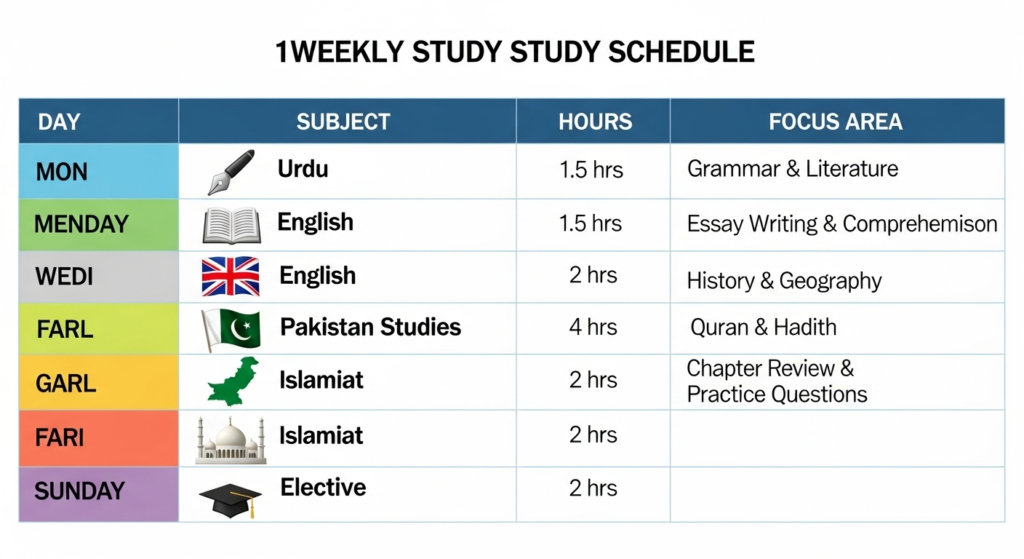
Example Weekly Study Plan:
| Day | Subject | Hours | Focus Area |
|---|---|---|---|
| Monday | Urdu | 2 | Prose, Poetry, Essay Writing |
| Tuesday | English | 2 | Grammar, Comprehension, Essay |
| Wednesday | Pakistan Studies | 2 | History, Geography, Civics |
| Thursday | Islamiat | 1.5 | Hadith, Seerat, Ethics |
| Friday | Elective (Art/Optional) | 2 | Project work or Literature |
| Saturday | Revision | 3 | Previous week topics, Past Papers |
| Sunday | Mock Test / Weak Areas | 2 | Practice and target weak subjects |
Tips:
- Prioritize weak subjects or chapters with higher marks.
- Keep short breaks (5–10 mins) between study sessions.
- Include weekly revision to reinforce memory.

3. Break Topics into Daily Targets
Why: Breaking topics into smaller goals improves focus and retention.
Step-by-step guide:
- Divide each subject into chapters and subtopics.
- Allocate 1–2 hours per chapter, depending on difficulty.
- Tick off topics after completing them to track progress.
Example Table: Daily Target Tracker (Urdu)
| Chapter | Focus Area | Status |
|---|---|---|
| Prose | Comprehension, Summary | ✅ |
| Poetry | Explanation & Important Lines | ⬜ |
| Essay Writing | Argumentative & Narrative | ⬜ |
4. Include Past Papers and Practice Questions
Importance: Past papers highlight frequently asked questions and help students manage time during exams.
Steps to Use Past Papers Effectively:
- Collect last 5 years’ past papers for Arts group subjects.
- Solve questions within exam time limits.
- Review answers and note areas needing improvement.
- Focus on high-weight and commonly repeated questions.
5. Make Notes and Summaries for Quick Revision
Tip: Short notes and summary sheets make last-minute revision efficient.
- Urdu: Key literary terms, important essays, and poetry lines.
- English: Grammar rules, essay outlines, and comprehension strategies.
- Pakistan Studies: Important dates, historical events, and diagrams.
- Islamiat: Seerat, Hadith, and ethics summaries.
- Electives: Project highlights, theory, and key points.
Example Table: Quick Revision Sheet (Pakistan Studies)
| Topic | Key Points / Dates |
|---|---|
| Pakistan History | Independence 1947, Major Events |
| Geography | Provinces, Rivers, Mountains |
| Civics | Fundamental Rights & Constitution |
6. Use Mock Tests to Track Progress
Mock tests simulate real exam conditions and improve time management.
Tips for Mock Tests:
- Time yourself like the actual exam.
- Start with difficult subjects first.
- Review mistakes immediately and rewrite correct answers.
- Track progress week by week to ensure improvement.
Also Read About: 10th Class Date Sheet 2026 Bahawalpur Board Exam Schedule
7. Maintain a Healthy Study Routine
Common Mistake: Students overwork themselves and neglect sleep, meals, or breaks.
Solution:
- Sleep 7–8 hours daily to boost memory and focus.
- Eat healthy meals and hydrate regularly.
- Include short physical activity or stretching to stay active.

FAQs: 10th Class Arts Group Study Schedule
Q1: How many hours should I study daily for Arts group?
A: 4–6 focused hours with breaks are ideal; adjust based on your weak subjects.
Q2: Should I focus more on theory or writing practice?
A: Both are important. Prioritize writing practice for Urdu, English, and project subjects.
Q3: Are past papers really effective?
A: Yes, they help identify patterns, important topics, and exam time management.
Q4: Can I revise multiple subjects in one day?
A: Yes, but allocate time blocks per subject to maintain focus.
Q5: How can I manage stress while following the schedule?
A: Take short breaks, exercise, and ensure proper sleep. Focus on gradual progress, not perfection.
✅ Conclusion
A well-structured study schedule is key to success in 10th class Arts group exams 2026. By combining daily targets, past papers, mock tests, and healthy routines, students can efficiently cover the syllabus, reinforce learning, and perform confidently in exams.
Remember: Smart Planning + Regular Practice + Healthy Routine = Exam Success!
